
Why it matters
Cats process food very differently from humans and dogs. Several things that are completely normal in a human kitchen — onions, chocolate, even a splash of milk — can be genuinely dangerous for a cat, sometimes in surprisingly small amounts.
Most cases happen by accident: a dropped scrap, a curious lick off a plate, or a "treat" shared with good intentions. Knowing the everyday culprits is the simplest way to prevent an emergency.
Even small, repeated amounts of onion or garlic — including in baby food, broth or gravy — can build up and harm a cat over time.
Common everyday culprits
- Onions, garlic, chives and leeks — in any form (raw, cooked, powdered), these can damage a cat's red blood cells.
- Chocolate and cocoa — contains compounds cats can't metabolise safely.
- Grapes and raisins — linked to kidney injury in some pets; best avoided entirely.
- Alcohol, raw bread dough and caffeine — all affect a cat's system far more severely than a human's.
- Cow's milk and dairy — most adult cats are lactose intolerant, so it's more of an upset-stomach risk than an emergency, but worth avoiding.
- Xylitol — a sweetener in some sugar-free gum, baked goods and peanut butter; toxic even in tiny amounts.
Do's and don'ts
✅ Do
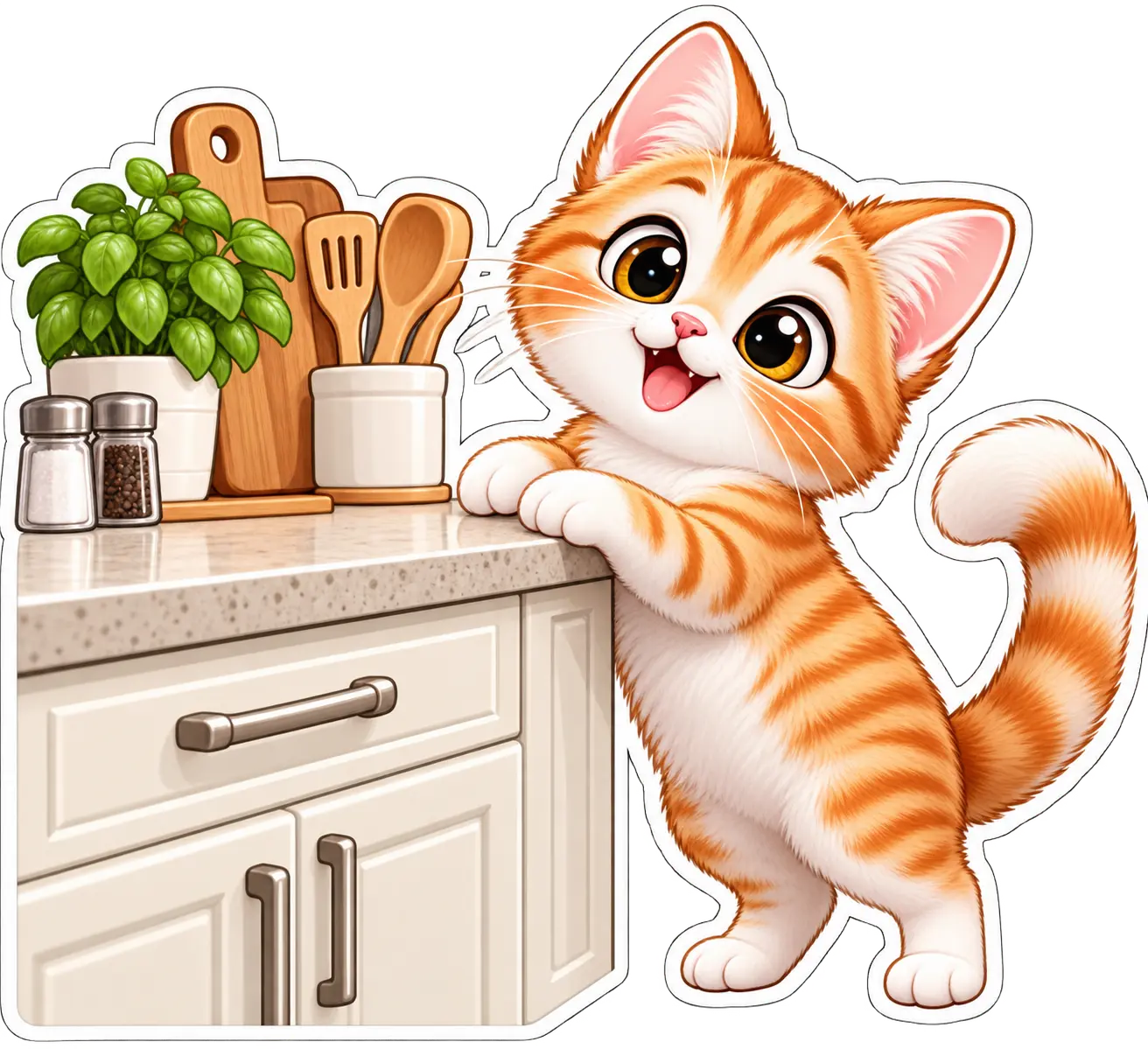
- Keep human food and scraps out of reach on counters and tables
- Check ingredient labels on anything you're tempted to share
- Store bread dough, chocolate and sweeteners somewhere sealed
❌ Don't
- Assume "just a little bit" is automatically safe
- Share table scraps as a regular habit
- Leave plates or pans unattended while cooking with onion or garlic
If your cat eats something harmful
Stay calm and remove access
Move your cat away from the food and take away anything left over.
Note what and roughly how much
Having the ingredient list or packaging ready will help a vet act faster.
Contact your vet or a pet poison helpline right away
Don't wait for symptoms to appear — early advice matters most.
Watch closely and follow their guidance
Vomiting, lethargy or loss of appetite are all reasons to seek care immediately.
This page is educational guidance and does not replace advice from a qualified veterinarian. If you believe your cat has eaten something harmful, contact your vet or an emergency animal poison line immediately.